How efficient on-device AI can make smart glasses more wearable
Discover how Everysight uses Arm Ethos-U85 and on-device AI to power gaze-based interactions in lightweight smart glasses without compromising wearability
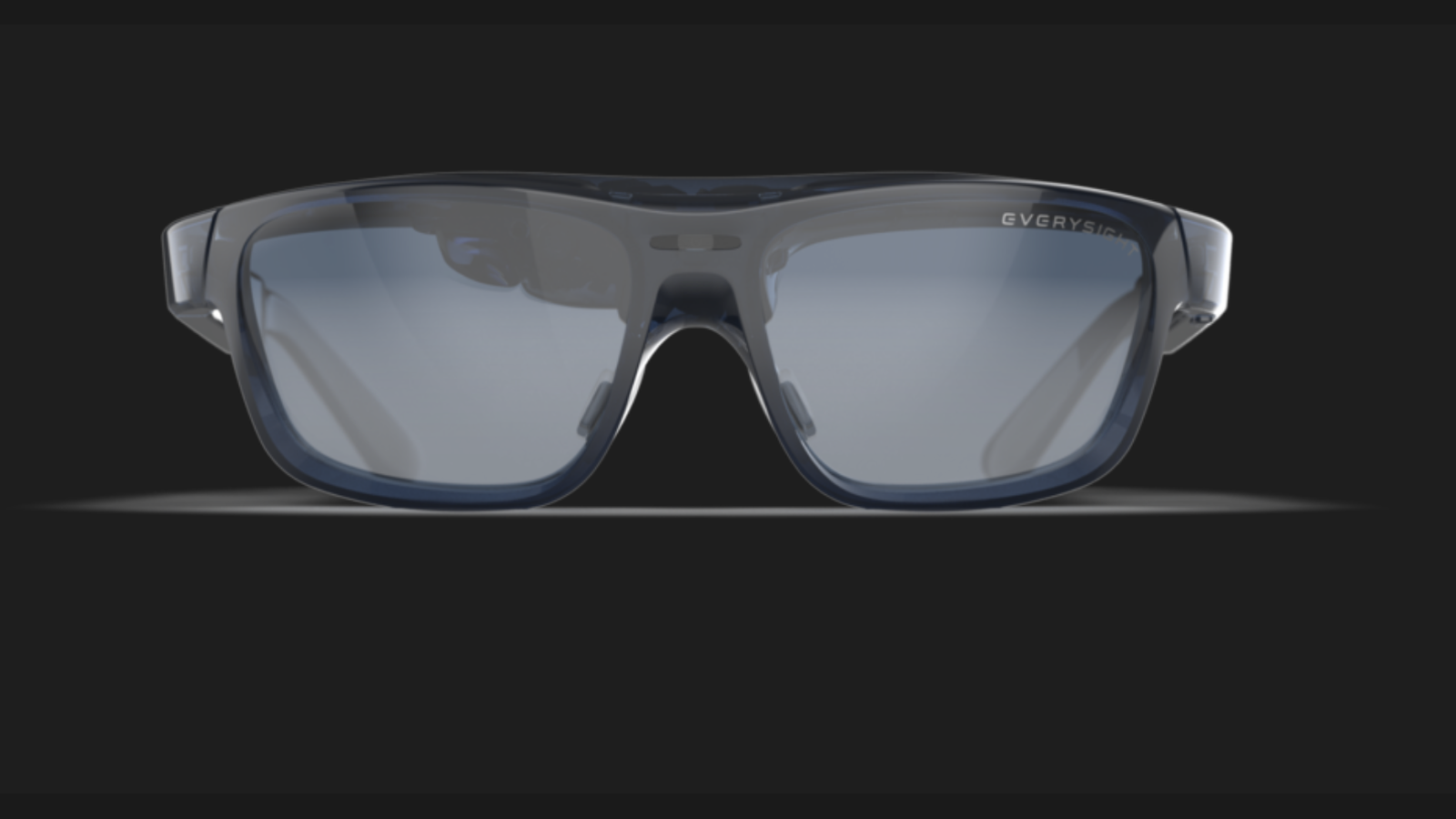
The smart glasses market is moving quickly as AI, compact displays, sensors, and connectivity make more capable wearable experiences possible. One current estimate values the global market at $2.5 billion in 2025 and projects it to reach $14.4 billion by 2033.
The opportunity is not simply to put another screen in front of users. Smart glasses can keep digital information in view while helping people stay focused on what is happening around them, rather than repeatedly shifting their attention to a handheld device.
What smart glasses can do differently
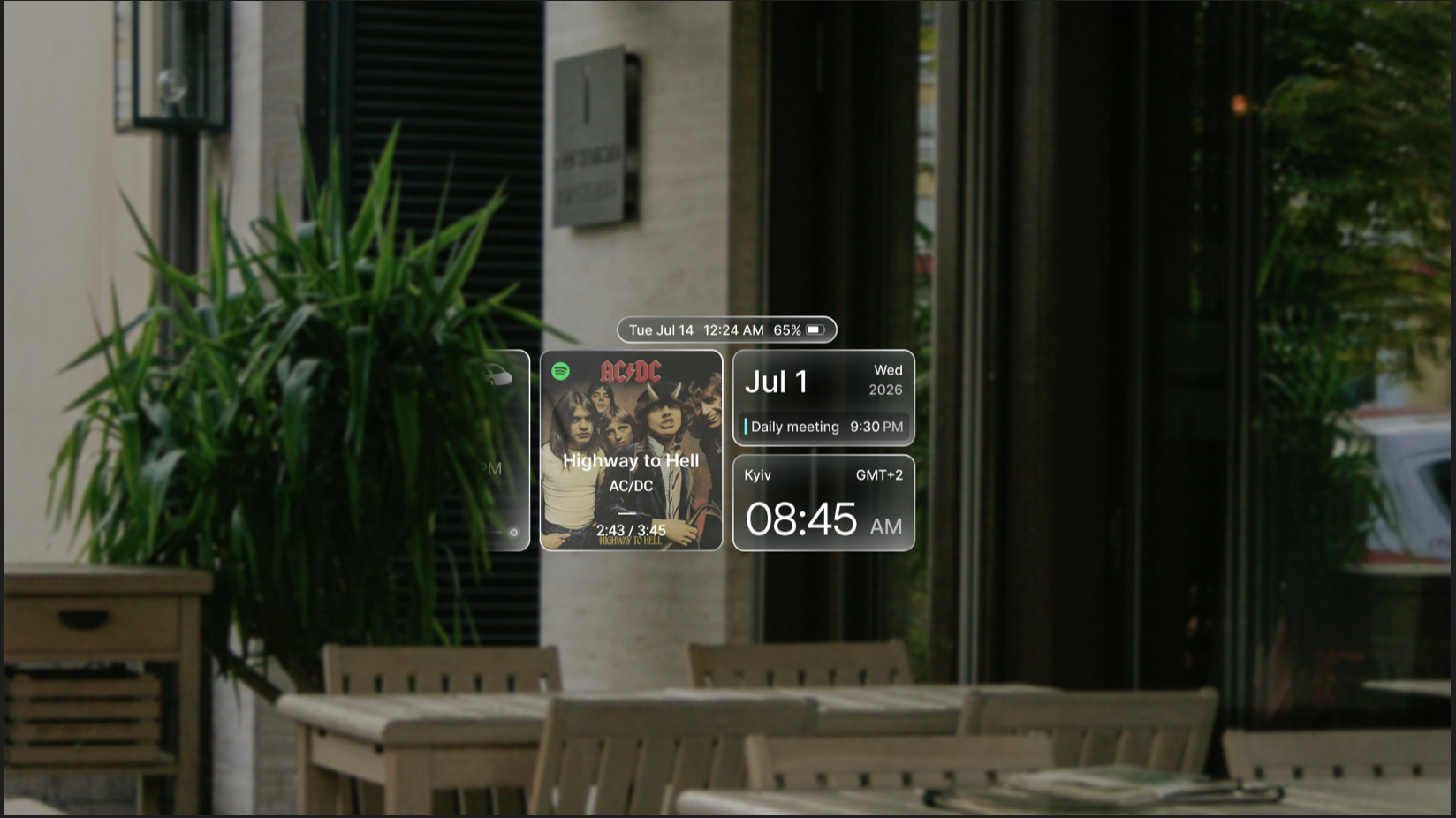
The smartphone can remain the source of applications, connectivity, data, and larger-scale compute. Smart glasses can extend that experience by bringing selected information directly into the wearer’s field of view.
That can be particularly useful when staying present matters or when a user’s hands and attention are occupied. The opportunity is to create a more natural relationship between digital information and the physical world. Users can access information available when and where they need it, with less dependence on touchscreens or handheld controls.
Making the experience practical is the real challenge
Adding more capability does not automatically make a better wearable. Every additional processing requirement competes for limited power, battery capacity, thermal headroom, and physical space. Smart glasses operate within constraints that become immediately visible to the user:
- Size and appearance: The product has to look and feel like eyewear rather than a headset.
- Interaction: Requiring handheld controllers, touchpads, or other accessories undermines the value of a hands-free device.
- Weight and comfort: Additional silicon and battery capacity add physical mass to something worn on the face.
- Power and heat: More compute consumes more energy and creates thermal challenges close to the wearer.
- Battery life: Increasing performance can shorten the useful operating time of the glasses.
The industry challenge is therefore bigger than putting AI into glasses. It is delivering useful, natural interaction within the physical and power constraints of a device people are willing to wear. Solving that problem requires placing each workload where it delivers the most user value without unnecessarily increasing the compute burden on the glasses.
Everysight starts with the glasses and not the computer
Everysight takes a “glasses-first” approach, fitting technology around the requirements of lightweight eyewear. That leads to an important product decision: the glasses do not need to replace the smartphone. They extend it.
Everysight focuses the glasses on experiences that benefit from immediate, hands-free access within the wearer’s field of view. The smartphone can continue to handle applications and workloads better suited to its larger power and compute budget.
The differentiation is not simply that information appears on a display. Everysight also uses gaze as an input, so the wearer’s eyes become part of the interface.
Gaze turns smart glasses into a hands-free interface
Gaze detection uses eye tracking to determine where a wearer is looking and turn that direction of attention into an input for the glasses.
For Everysight users, that means the eyes can help control what appears in the interface without requiring a separate handheld controller. Wearers can use their gaze to move through menus, focus on information, select an item, or indicate where they want to explore further.
That gaze signal can support several types of interaction:
- Navigate: Gaze can move focus through an interface without requiring touch input.
- Select: A defined gaze interaction can indicate where the user wants to select an item or explore additional information.
- Add context: Knowing where the wearer is looking can identify the relevant part of the visual scene for subsequent processing.
Potential uses include viewing route or performance information while moving, navigating hands-free menus, selecting an item for more detail, or identifying part of a scene for further AI processing.
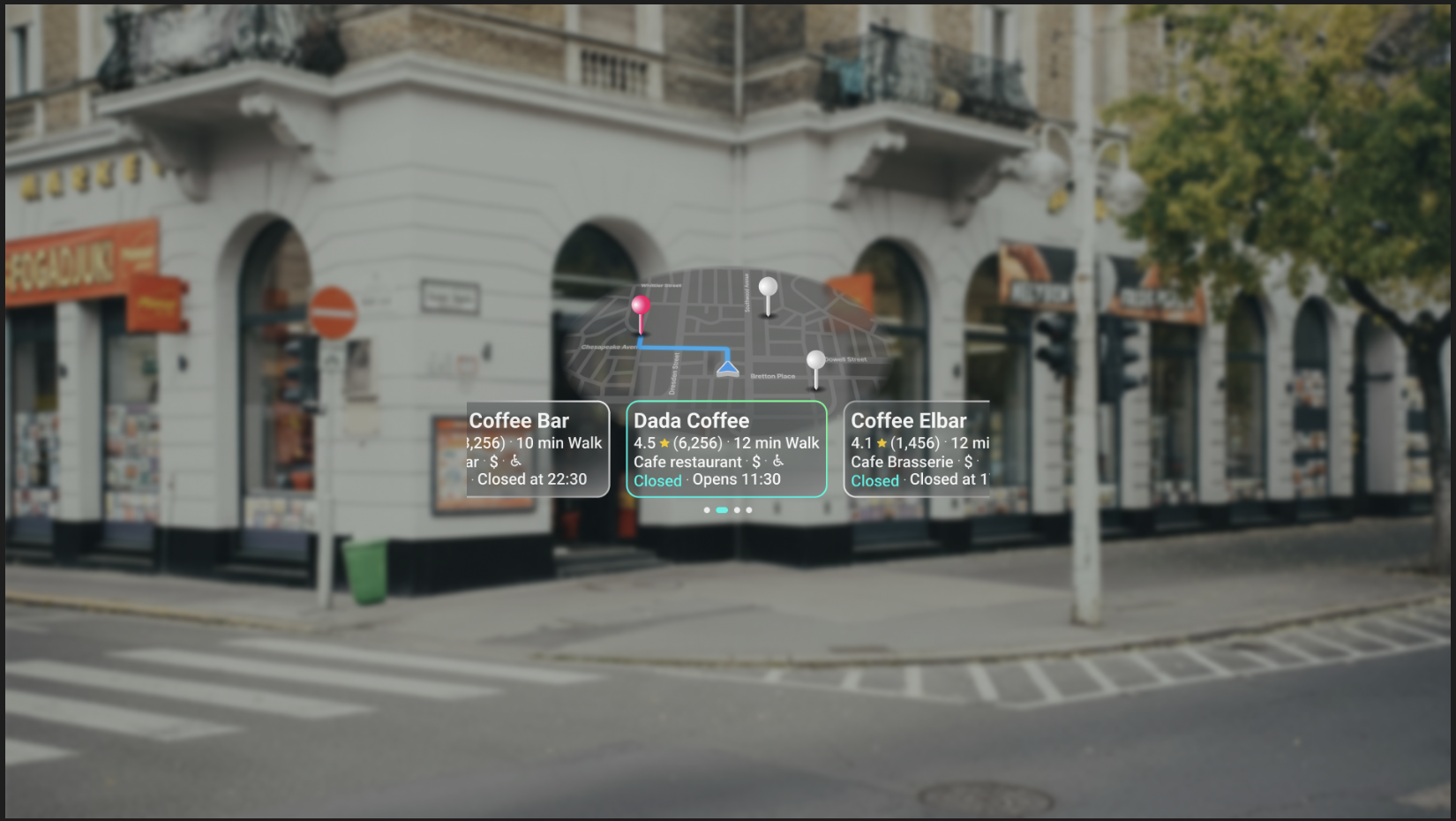
For the wearer, the benefit is a more direct connection between attention and interaction. Useful information can remain accessible without switching to a phone or another controller. But making gaze useful as an interface depends on processing eye movement quickly enough to keep the digital experience synchronized with what the wearer is seeing.
How gaze detection works
Delivering that experience requires the glasses to determine where the wearer is looking quickly and accurately.
The glasses combine an eye-tracking camera, a forward-facing RGB camera, and the optical system. The eye-tracking pipeline detects features including the pupil, iris, eyelids, and reflections, then derives the wearer’s line of gaze.
That is where the story moves from user experience to the underlying compute challenge. The system must process eye movement in real time without continuously sending high-volume camera data to another device. If that processing is too slow or requires too much communication with the smartphone, the gaze interaction can lose the immediacy that makes it useful.
Gaze detection creates an edge-AI problem
Three constraints make this workload well suited to local inference.
Latency
Eye movement changes quickly. Gaze information must stay synchronized with the forward-facing camera, displayed content, and the wearer’s current point of attention.
Sending the eye-camera stream elsewhere for processing adds delay. For an interactive interface, that latency can affect accuracy and responsiveness, making the experience feel disconnected from where the wearer is looking.
Bandwidth
Everysight uses Bluetooth Low Energy to reduce communication power.
Continuously transmitting raw eye-camera imagery would increase the amount of data moving between the glasses and smartphone. Local image processing reduces that raw sensor data to a much smaller output, such as a gaze vector or eye-feature telemetry.
Privacy
Local processing also creates the opportunity to keep more sensor-derived information on the glasses rather than transmitting continuous raw imagery.
Together, these constraints make local AI acceleration valuable not only for inference but also as a data-reduction engine close to the sensor. The glasses can process high-volume visual input locally and pass a much smaller, useful representation of gaze to the rest of the system.
Why Ethos-U85 matters for wearable AI
Arm Ethos-U85 helps address this compute challenge by providing machine learning acceleration for the eye-tracking workload within the constraints of wearable hardware. Everysight needs enough machine learning acceleration to process eye tracking locally without introducing the size, power, and thermal demands of a larger application processor.
The Alif E4 platform provides Everysight with an embedded compute option that includes Arm Ethos-U85 NPU acceleration. The objective is not maximum AI performance. It is the required inference performance within the product’s system budget.
For wearable devices, that distinction is important. An AI accelerator must enable the intended experience without unacceptable compromises in size, power, heat, or battery life.
For Everysight, local NPU acceleration enables the system to:
- Run the latency-sensitive eye-tracking workload close to the sensor.
- Reduce the amount of raw sensor data transmitted to the smartphone.
- Keep larger application workloads on the smartphone rather than forcing them onto the glasses.
- Avoid putting every AI workload onto the most constrained device in the system.
Together, this supports a hybrid compute architecture in which the glasses, smartphone, and potentially cloud systems handle different parts of the workload according to their latency, bandwidth, and compute requirements.
For the wearer, this means staying present and engaged in the real world while accessing and controlling digital information naturally, without reaching for a phone or controller.
A wearable does not have to run every workload locally
Everysight’s approach points to a larger design principle for wearable AI. The question is not simply “Can this model run on the device?”
The more useful questions are:
- Does this workload require immediate sensor feedback?
- What latency can the user experience tolerate?
- How much data would off-device processing require?
- What is the power cost of local processing?
- What does the wearable gain from running the workload itself?
- Which functions can remain on the smartphone or move to a larger AI system?
For gaze detection, those requirements favor local inference. Other workloads can remain on the smartphone or move to the cloud when appropriate. That division of work helps Everysight add AI-driven interaction without requiring the glasses themselves to absorb the power, thermal, and physical costs of every application workload.
From gaze detection to a wearable application platform
Eye tracking is one example of how Everysight can use local AI while preserving a glasses-first design. Everysight also describes the glasses as a platform for its own applications and partner-developed experiences, supported through an open SDK.
For developers, that opens a broader opportunity. Applications designed for smart glasses do not simply have to reproduce a smartphone interface on a smaller display. They can take advantage of gaze, context, and hands-free interaction while distributing compute intelligently across glasses, smartphones, and larger AI systems.
Everysight shows how this architecture can turn a difficult wearable constraint into a practical design choice. Fast, sensor-dependent AI runs where it is needed, while larger workloads stay where more compute is available. This helps preserve the lightweight eyewear experience. The broader principle is to fit compute to the product and the experience, rather than redesigning the product around the compute.
Explore Arm Ethos-U85 for edge AI
Discover how Arm Ethos-U85 delivers energy-efficient AI acceleration for embedded devices, enabling responsive, on-device intelligence within constrained power and compute budgets
Explore Arm Ethos-U85
Re-use is only permitted for informational and non-commercial or personal use only.
