How on-device AI makes home appliances easier to use
Natural-language AI helps manufacturers make advanced appliance features easier to use, creating more intuitive experiences and helping products stand out
Turning user intent into device action
AI is changing the way we interact with technology. Instead of learning how a device works, navigating menus or remembering specific commands, users can increasingly express what they want to achieve and let the technology determine how best to respond.
In the smart home, that creates an opportunity to make devices not just more capable, but more intuitive. On-device AI can interpret user intent alongside relevant context from the device and its environment, translating a simple request into the right action. The result is an experience that helps people get more from the capabilities already built into their products. That matters because people do not always take full advantage pf the roch feature set in today’s appliances. Markets and Markets projects that the smart appliances market will grow from $42.35B in 2025 to $71.28B by 2030, driven in part by automation, improved user experience, and feature execution.
A washing machine can support dozens of fabric types, cycle options, temperatures and care modes. However, choosing the right combination can still require users to understand the product in detail. Grovety and Alif are targeting a different experience. Instead of asking users to understand the machine, the machine can understand the user.
“Wash my white linen shirts.”
Their system interprets the request, identifies the relevant fabric and color parameters, validates the action against the OEM’s approved control rules, and selects the appropriate wash program. The value is not simply voice control. It is a simpler interface that makes product capabilities easier to access.
How on-device natural-language AI works
Spoken request → speech recognition → intent and parameter extraction → approved device action
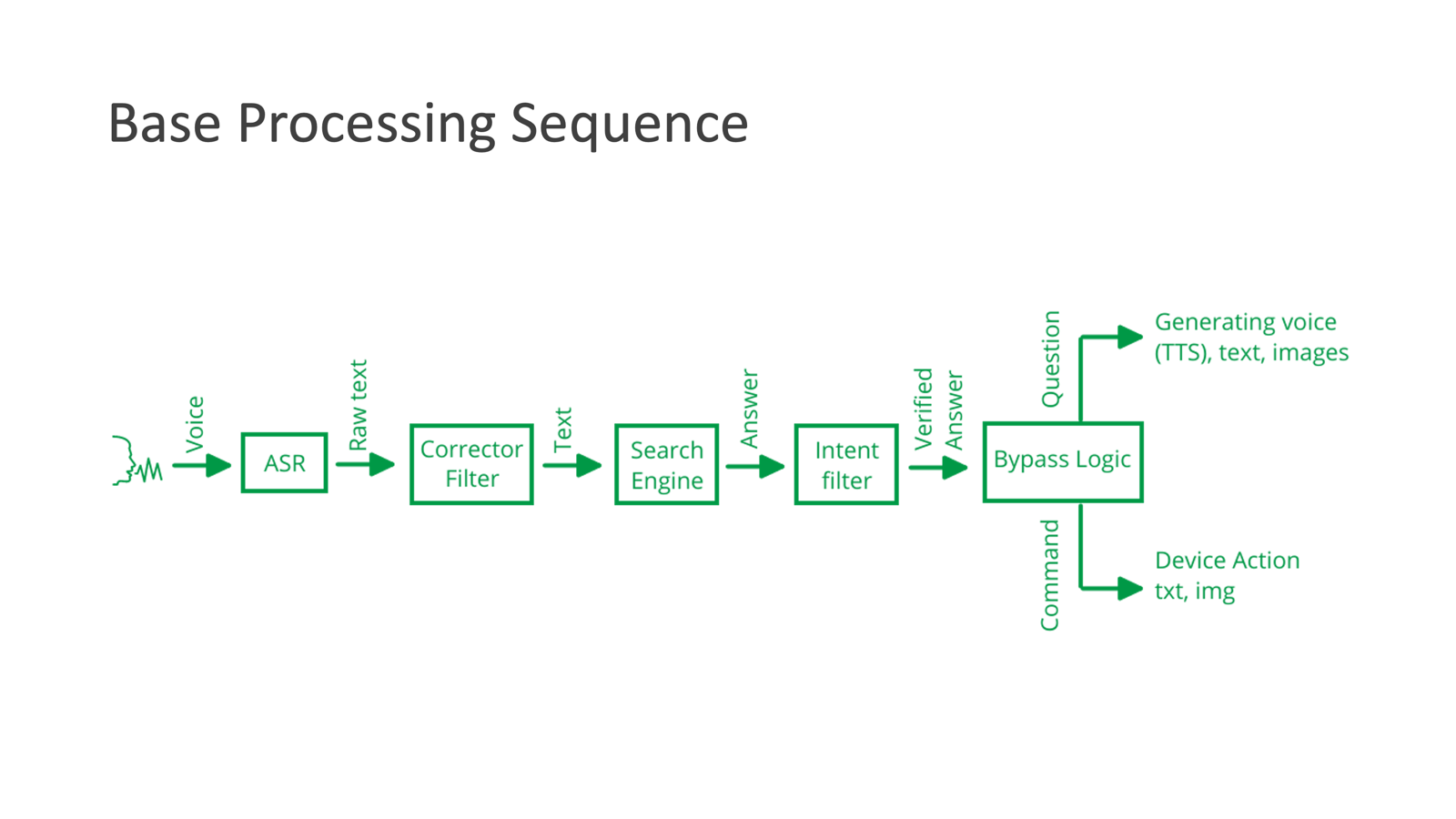
Grovety provides the speech, intent, and application software layer that connects natural-language input to the device-control system. Its approach goes beyond fixed keyword recognition by using models that can interpret natural spoken requests and, where appropriate, retrieve answers from an OEM-defined body of product information.
Alif provides the embedded compute platform through its Ensemble family of microcontrollers, which combine Arm-based CPUs with Ethos-U neural processing. Alif designed the portfolio to span multiple performance, feature, and price points while maintaining compatibility across the family. That gives OEMs a way to develop one core AI solution, then scale or tune its capabilities across entry-level, midrange, and premium products rather than create a separate implementation for each tier.
According to Alif, that compatibility enables even smaller devices in the portfolio to support spoken-sentence recognition. Higher-performance devices can accommodate richer models and capabilities. Grovety is also evolving parts of the automatic speech recognition pipeline from convolutional operators toward transformer-based processing to take greater advantage of Ethos-U85 to improve model footprint and performance.
The workflow does not require an open-ended, general-purpose AI assistant. For a defined product domain, a smaller purpose-built model can be trained around supported commands, parameters, permissions, and actions. For question-and-answer use cases, Grovety also constrains responses to approved product information, such as manuals and troubleshooting guides. This gives manufacturers greater control over the information the system can use when responding.
Together, these choices help OEMs fit natural-language capabilities within the cost, memory, power, latency, privacy, and reliability requirements of embedded products.
On-device processing is key. Running AI workloads locally can reduce the need to send voice or device data to the cloud. It can also reduce response times and preserve core functionality when connectivity is unavailable. Local processing can also help control The product can still use connectivity for software updates, model updates, language changes while keeping day-to-day AI processing on the device.
Why Grovety and Alif chose Arm
For Grovety and Alif, Arm provides more than an acceleration block. It provides a compute platform that lets the natural-language pipeline distribute work across Cortex-M CPUs, Ethos-U NPUs, and, where the application requires it, Cortex-A CPUs. This gives the partners a common architecture that can scale from tightly constrained embedded devices to systems requiring more application processing, larger AI workloads, or richer operating environments.
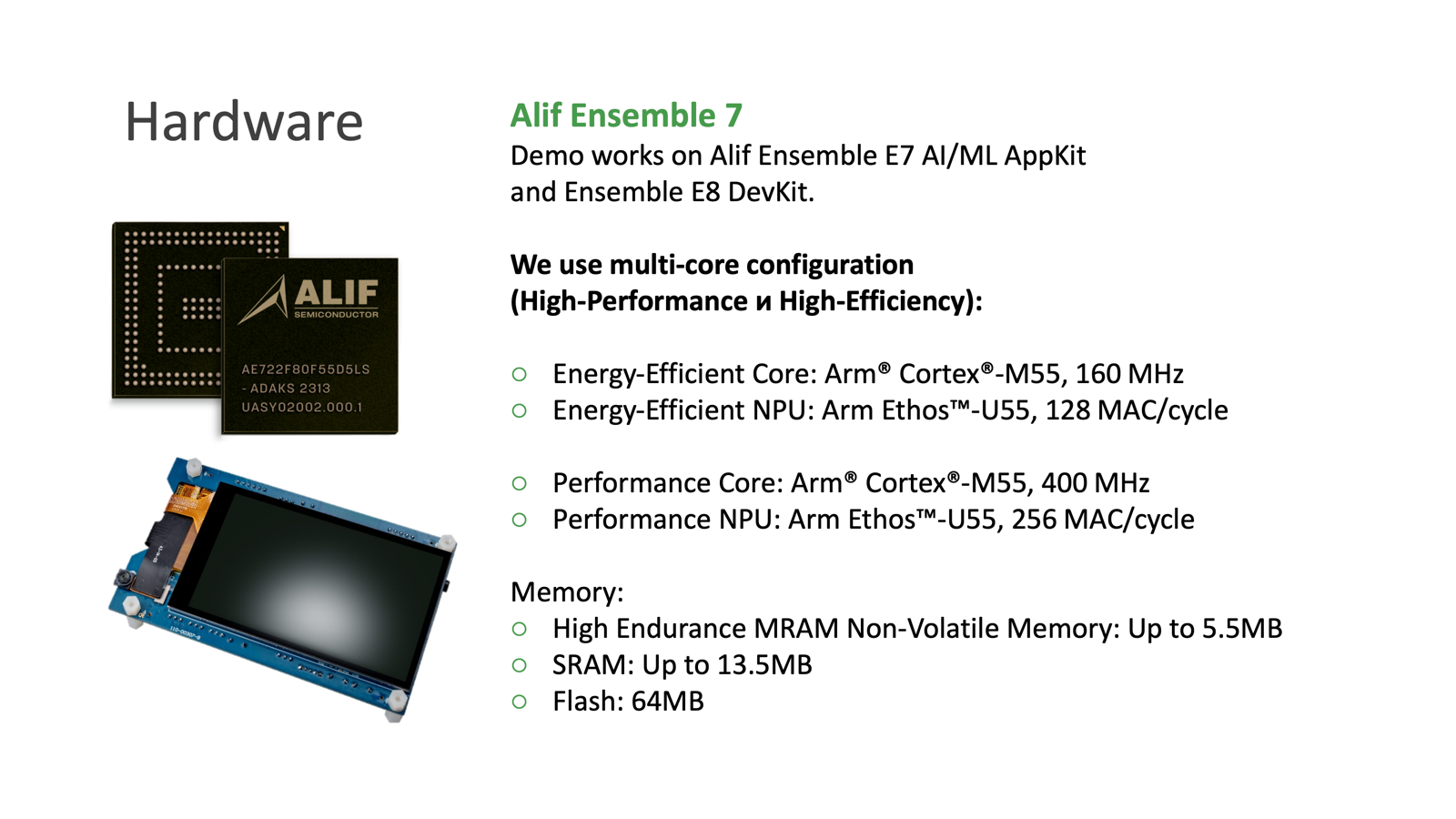
Alif’s Ensemble architecture puts that platform into practice. Depending on the device, Ensemble processors combine Cortex-M55 CPUs, Ethos-U55 and Ethos-U85 NPUs, and Cortex-A32 CPUs. Alif pairs those Arm technologies with its own memory architecture and power-management capabilities to keep AI processing close to the data while meeting the power and cost requirements of embedded systems.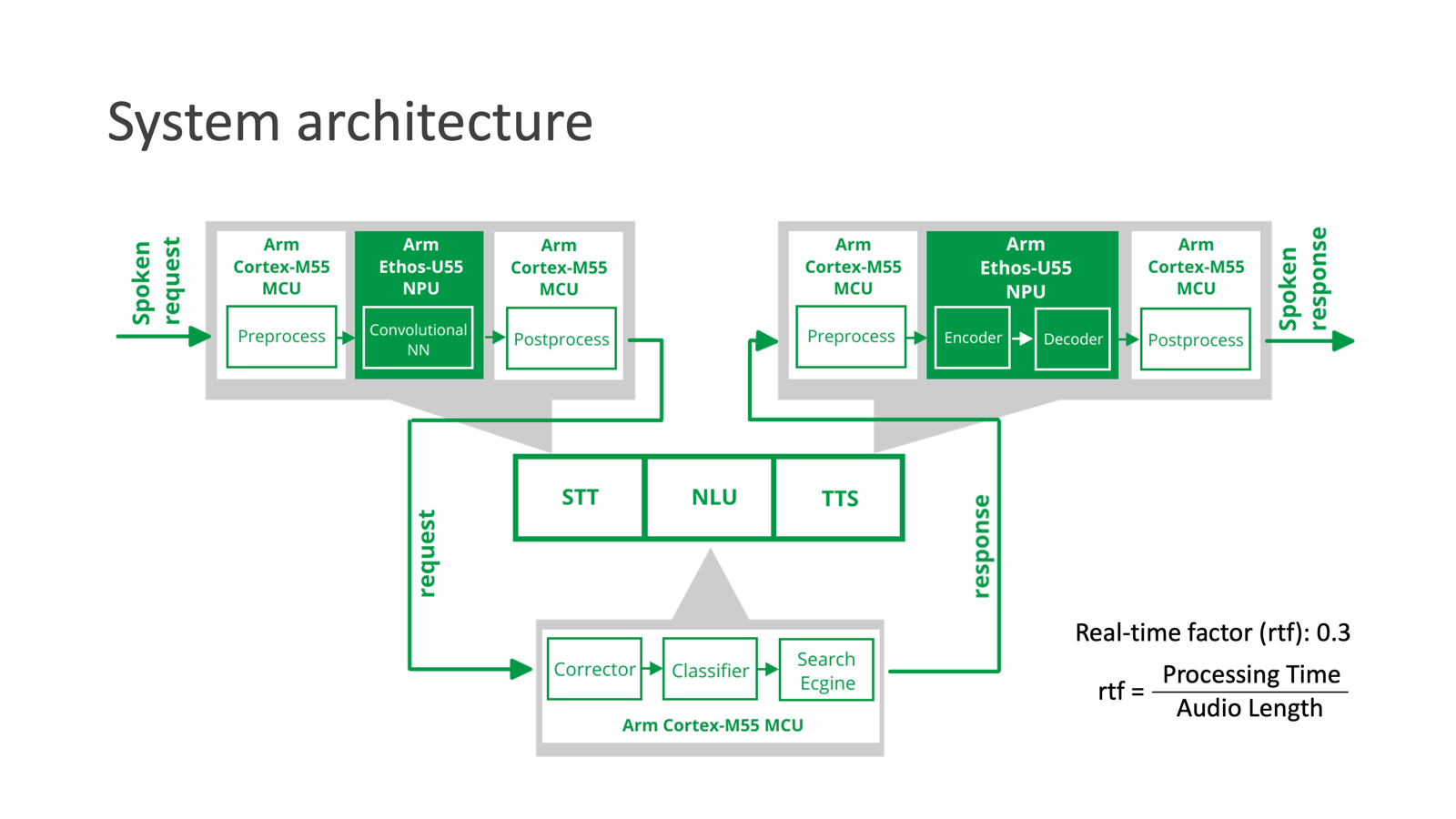
That architecture directly influenced Grovety’s work. The original automatic speech recognition network used a more conventional convolutional design. Grovety and Alif are now moving selected operators toward transformer-based processing so the workload can take greater advantage of Ethos-U85. The goal is to improve model footprint and performance. Alif identified Ethos-U85’s transformer support as an important capability for extending this type of natural-language AI into embedded products.
Grovety similarly positions Ethos-U55 and Ethos-U85 as a way to bring AI workloads that traditionally required larger compute systems into the microcontroller class. Its software is designed around Arm Cortex-M and Ethos-U today, with a development path that can scale to Ethos-U85 as model complexity grows.
The benefit for OEMs comes from how those layers work together. Cortex-M can handle control, signal processing, and other embedded tasks. Ethos-U accelerates the neural-network portions of the workload, including transformer-based models on Ethos-U85. Cortex-A can add higher-level application processing and operating system support when the product requires it. Alif integrates those capabilities into a common hardware architecture, while Grovety maps its speech and natural-language software to the appropriate compute for the product.
Together, these technologies provide a consistent development path across product classes without requiring every device to use the same amount or type of compute. A cost-sensitive product can keep more of the workload on Cortex-M and Ethos-U, while a more capable system can add Cortex-A processing or use Ethos-U85 for more demanding transformer-based models. The software architecture and Arm development foundation remain familiar as product requirements change.
For Alif, this compatibility means developers can build a common solution and tune its capabilities for different performance and product tiers rather than create separate architectures for each device. Combined with Grovety’s model optimization and natural-language software, the Arm platform provides a practical path from a voice AI concept to deployable embedded products.
These building blocks give OEMs a practical way to ring on-device AI to a broader range of embedded devices and create more intuitive product experiences

Re-use is only permitted for informational and non-commercial or personal use only.
